

As much as I had been looking forward to visiting the Scottish National Gallery in Edinburgh, I felt a tinge of uncertainty as the train pulled into Waverley Station. The walk from the railway station to the gallery was a short one and a very familiar route. I knew the gallery rooms are spacious and airy and that staff would be immediately on hand at various points. So why the apprehension?
Anticipating “Problems”
I wanted to see a particular exhibition – a small selection of watercolours by a man better known for his architecture and the decorative arts: Charles Rennie Mackintosh. I checked in advance (of course) on which level and section of the gallery the paintings would be located. What I could not rehearse ahead of the trip was the use of any stairwells or lifts. Would the stairs be steep and very enclosed? Would the elevators be spacious or cramped? Might courage elude me at the last moment and I’d leave the gallery without achieving my goal?
Fighting Doubts
I had started to imagine the worst possible outcome – “catastrophising” as psychologists would call it. Then I remembered the advice I’d been given in recent years: to challenge negative thoughts and question my own pessimistic assumptions. I continued on to the gallery and resolved to negotiate each hurdle when, or rather if, they appeared.
I entered the gallery via the entrance from The Mound Precinct which leads into Level 3 of the gallery. I headed into the reception area and asked for directions to the exhibition. I was directed to use the nearest stairs and head down to a lower floor. The staircase was a narrow spiral and completely enclosed by solid walls. Anticipating feelings of being “trapped”, I didn’t feel brave enough to tackle that route. I saw there were lifts nearby. Enclosed lifts. I wasn’t in the mood for those either. The urge to leave was burgeoning but instead, sensibly, I followed my own advice: “Don’t be afraid to ask!”.
A Helpful Response
I noticed a member of staff standing in the gallery’s entrance area – identifiable by wearing a coloured lanyard – and made my approach. I explained my situation clearly and frankly. “I struggle with using enclosed stairwells and lifts; are there any alternative routes to access the gallery’s other levels?”
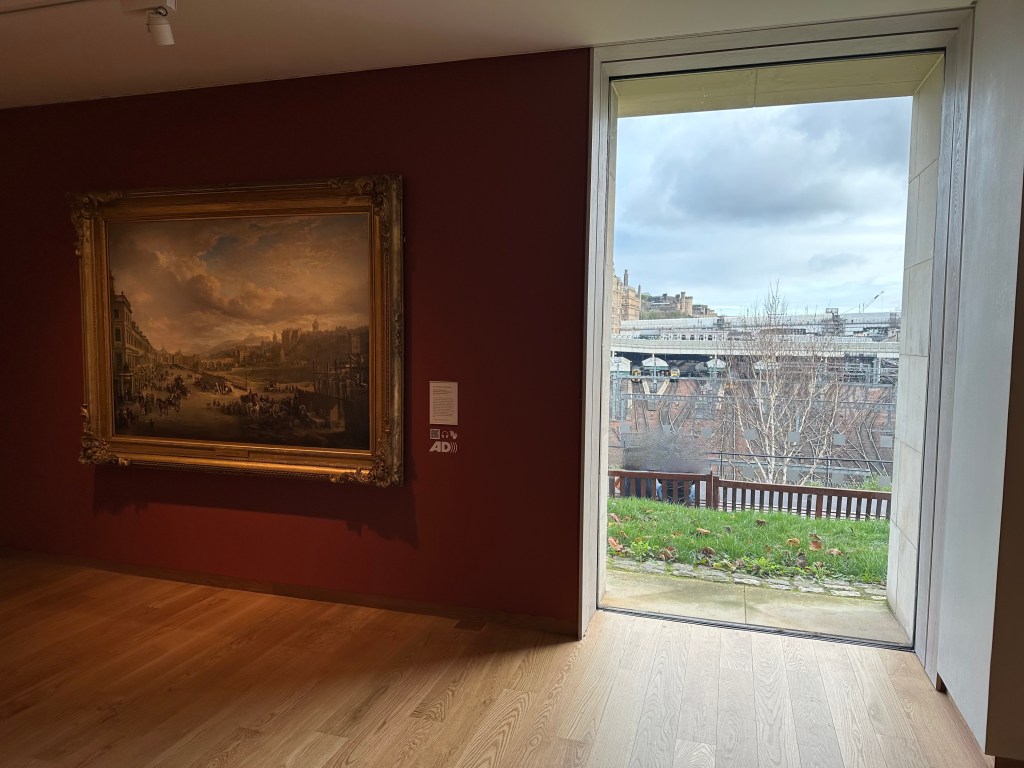
The response was swift and welcoming. I was invited to step over to view a map of the gallery displayed on a nearby wall. After locating our starting point on the map, an additional stairwell towards the rear of the gallery was indicated. The staff member explained that this was a more spacious staircase. Windows give the stairwell natural light and a view of the outdoor scenery. That was exactly what I needed.
Filling Visitors’ Needs
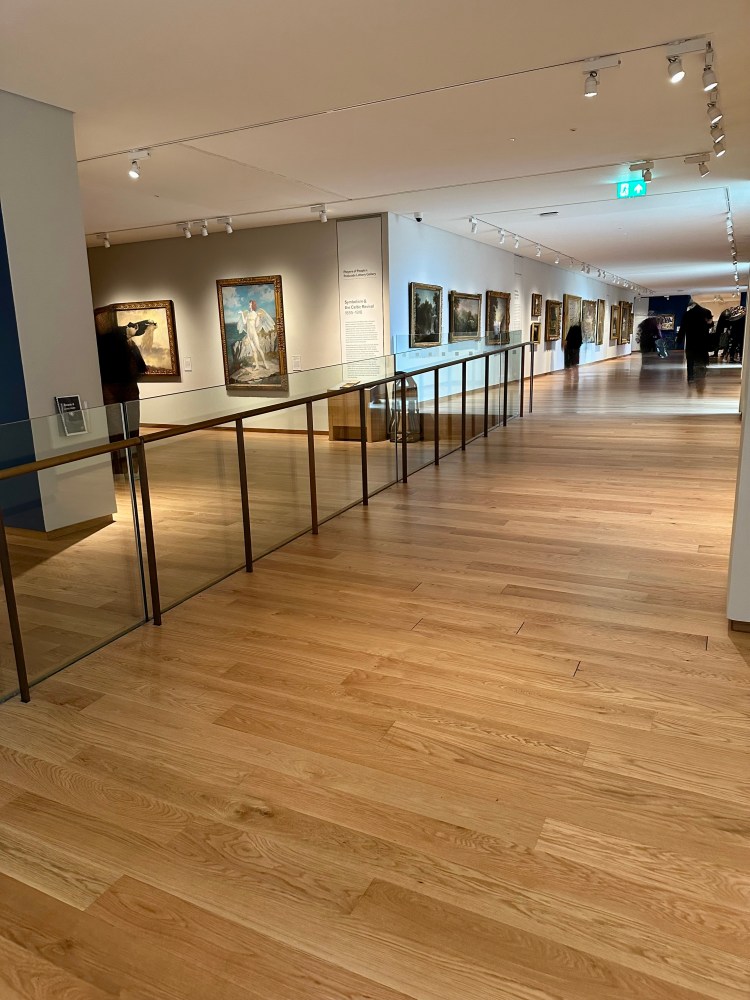
The National Gallery clearly works hard to fill the various needs of its visitors. Their website demonstrates the degree of thought which has gone into making provisions.
- Floor plans and sensory floor plans can be viewed on their website prior to a visit.
- The gallery is accessible by wheelchair – some are available to borrow.
- For visitors with visual impairment, large print labelling of displays is offered. Audio descriptions of the gallery are provided on their website along with information on futher audio provisions. Guide dogs are welcomed.
- BSL video guides of the gallery are provided on the website.
- The gallery has been recognised by Alzheimer Scotland as “dementia friendly”.
- Visitors and carers dealing with autism, learning disabilities and those with additional sensory needs are also given consideration.
For anyone who would like to visit the Scottish National Gallery and has a specific challenge, I would recommend consulting the website. The Gallery can be contacted by an online form and a telephone number is also provided should you have further queries.
Finally, when you reach the gallery, do not hesistate to approach a member of staff for assistance!
Reflections on My Visit
I had consulted nationalgalleries.org before travelling to Edinburgh but not to the fullest extent possible. On my return, I’ve explored the site’s features more fully and I realise that had I viewed the video guides before travelling, I might have approached the gallery in a more relaxed frame of mind. That said, having experienced a moment of anxiety, I learned first-hand how helpful and reassuring the staff’s response can be.
For anyone who likes to use video footage to feel “familiar” with a location before visiting for the first time, the videos on nationalgallery.org are a boon. To illustrate, I would highly recommend the following video which introduces visitors to the gallery:
Please note: This article refers specifically to the National Gallery of Scotland located in The Mound, Edinburgh. Information about accessibility at the Scottish Modern and Portrait Galleries is included on their website.
Details:
Website: https://www.nationalgalleries.org/visit/scottish-national-gallery
Address: The Mound, Edinburgh, EH2 2EL
Opening Hours: Daily, 10am–5pm
Admission Charges: Entry to the National Gallery is free.
Photo Credits:
Scottish National Gallery exterior: ID 324460148 © Stefano Ember | Dreamstime.com
Scottish National Gallery interior: © A.P.

